
We make custom 3D point-of-sale (POS) display props for brands, visual merchandising teams, and display fixture manufacturers: shelf toppers, mascots, product replicas, and sculpted features that bring a retail display into three dimensions. Start with a reference image, sketch, or 3D file, and we can develop the shape, finish, and attachment details for your display. The minimum order quantity is one piece.
At a glance
Based in Xiamen, China · MOQ 1 · Prototype 10–15 days · Production about 20–30 days after approval · Fiberglass (FRP), foam, 3D print, clear resin · EXW / FOB / CFR / CIF / DDP · sales@customdisplayprops.com
Timing and delivery terms are confirmed in the quotation for your design, quantity, and destination. Shipping time is additional.
3D props for shelves and in-store displays
- Shelf & header toppers: sculpted heads and other 3D shapes projecting from a shelf, display header, or fixture top, with attachments planned around the fixture.
- Brand mascots and character figures: a custom mascot, brand mascot statue, or 3D display figure developed from your approved character artwork.
- Giant product replicas: enlarged product models that provide a focal point above or alongside the merchandise.
- Animal and creature figures: realistic animal heads, sculpted creatures, and organic forms, with separate details where needed for handling and repair.
- In-store feature props: freestanding or fixture-mounted sculptural elements for campaign displays and visual merchandising.
Our scope here is the custom three-dimensional prop. Share the display fixture drawings or photographs so we can coordinate its size, balance, and connection points.
Choosing the material
The weights below are approximate examples for a head shape about 30 × 30 × 50 cm. They are a starting point for design discussion; the finished weight depends on the shape, wall thickness, coating, and mounting hardware.
| Material | Approximate example weight | Handling and detail | Mold needed? | Typical use |
|---|---|---|---|---|
| Hollow fiberglass (FRP) shell | 2–2.5 kg | Resists knocks and normal hand pressure. A mold reproduces clear detail and a consistent shape across the run. | Yes | Props within customer reach; runs of 10 or more where a mold can be reused. |
| EPS foam with hard coating | 1–1.5 kg | Can dent under pressure from a sharp object. Detail is coarser; not suitable for thin protruding features such as tusks, fingers, or tongues. | No | One-off, large, lightweight props; out-of-reach positions and short events. |
| 3D print with hand-painted finish | 1–1.5 kg | Good detail without a production mold. Thin parts can be brittle and need careful handling. | No production mold | Prototypes and small runs of 1–5 pieces. |
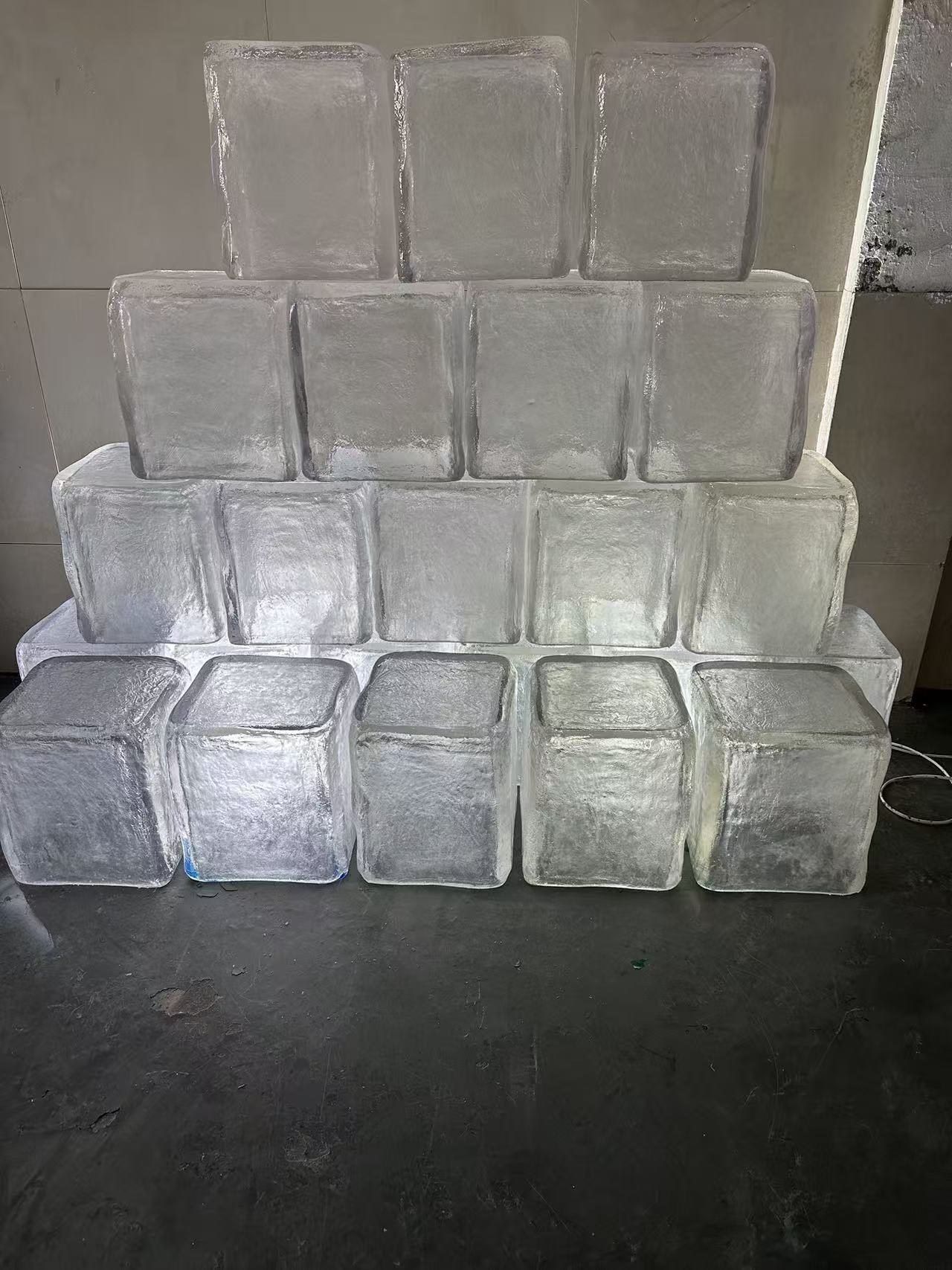
| Clear resin | Confirmed for the individual design | Transparent effects such as ice cubes, water drops, and clear decorative elements. | Confirmed for the shape and casting method | Clear features where transparency is part of the design. |
For shelf props that customers can touch, we generally recommend a fiberglass body with soft PU details where appropriate. A 3D-printed sample can confirm the shape before a production mold is made; we then confirm the final material, finish, and attachment design.
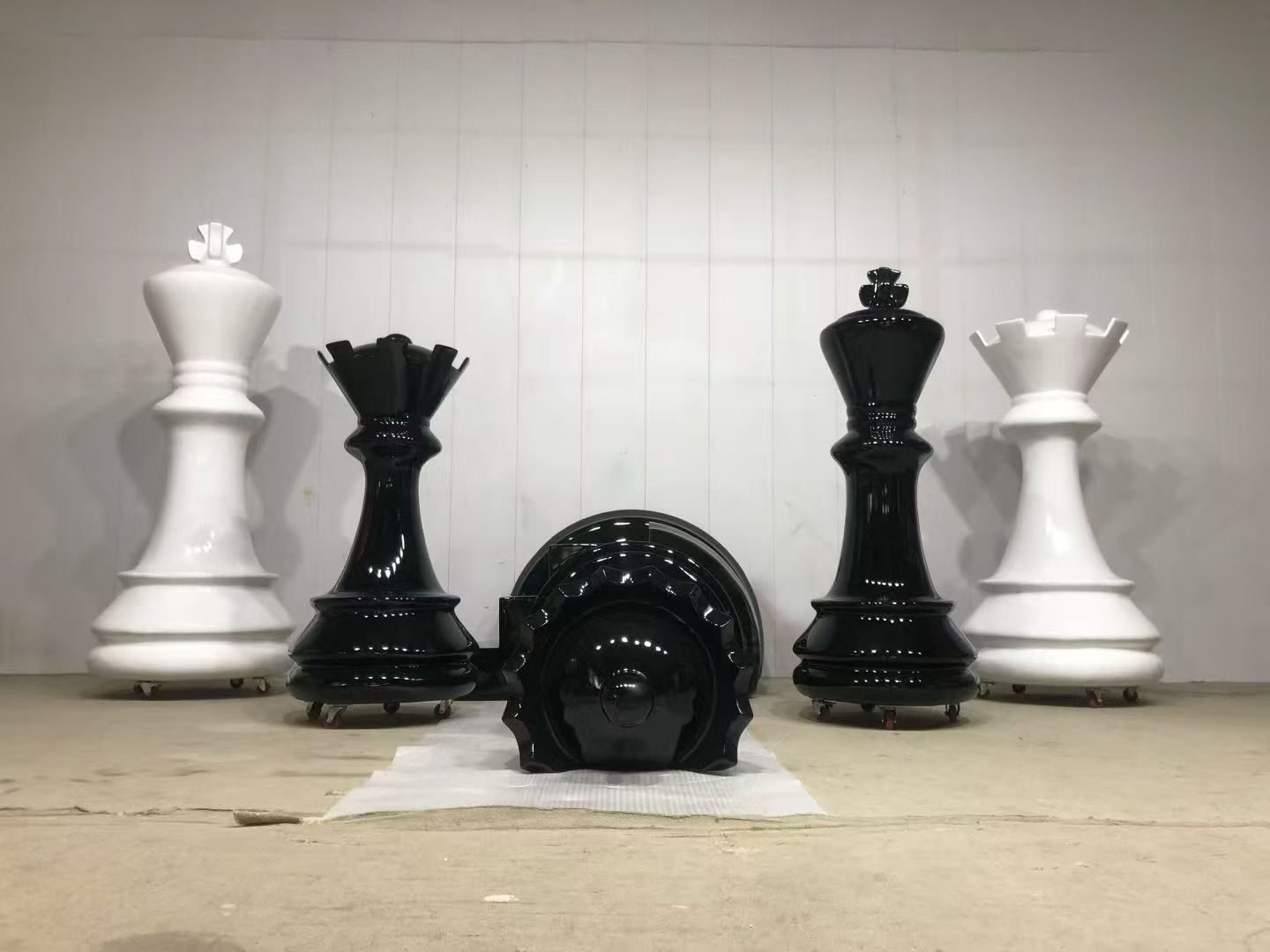
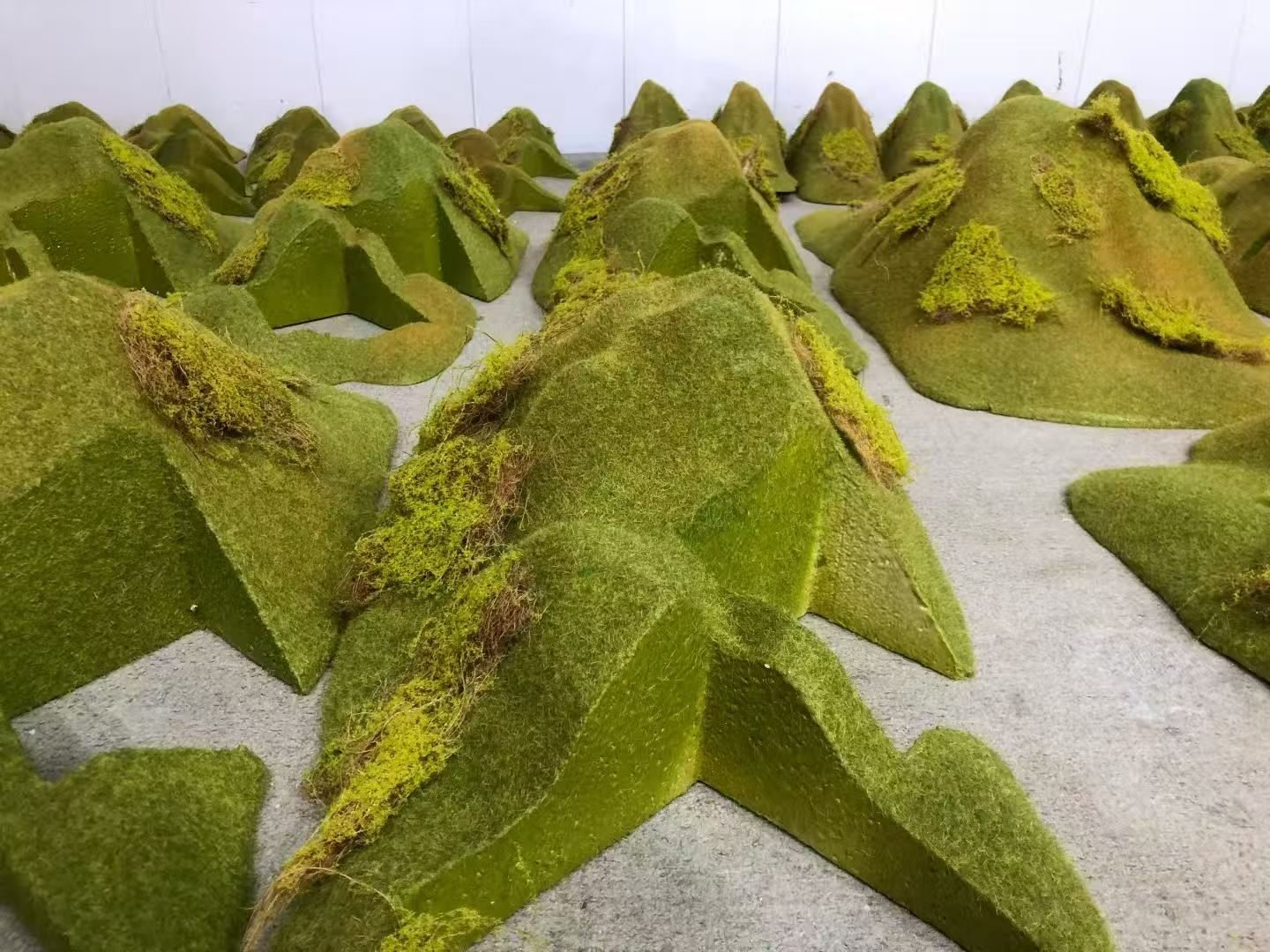
Retail and window display examples
Surface finishes and brand colors
Finishes include hand-applied full-color paint, pearlescent and metallic effects, automotive paint with clear coat, flocking, and faux moss. We offer Pantone color matching and can prepare a painted sample so you can approve the color together with the surface finish.
Send the required color references and tell us whether the prop will be close to customers, under strong retail lighting, or paired with printed graphics. We use these details to agree on the finish before production.
Mounting and handling in a retail space
Mounting options include rubber-coated neodymium magnets, 3M VHB double-sided tape, concealed screws, and clips. The choice depends on the prop weight and shape, the mounting surface, and how people may touch or pull it. Magnets require a suitable steel surface; adhesive attachment requires a compatible, prepared surface. We confirm the attachment design against your fixture and arrange a trial fit.
- Plan for pulling forces: concealed screws or clips can provide mechanical retention where the display needs it.
- Round exposed points: agree on rounded tips and soft details where appropriate for customer access.
- Make vulnerable parts replaceable: removable tusks, fingers, or similar details can simplify packing, repairs, and replacement.
- Prepare for upkeep: spare parts and touch-up paint can be included in the quotation.
From your brief to delivery
- Send your brief. Include reference images or 3D files, dimensions, quantities, mounting surface, delivery deadline, and destination country.
- Approve the 3D model and renderings. Confirm the proportions, visible details, colors, and connection points.
- Review a prototype. Check the shape and finish before the production run. Typical prototype time is 10–15 days, with the schedule confirmed for the design.
- Make molds and produce the run. Where the chosen process requires a mold, production follows the approved sample. Allow about 20–30 days after approval, subject to the agreed scope.
- Review photos, video, and trial fitting. Check the finished pieces and attachment details before packing.
- Pack and ship. We confirm packaging and freight in the quotation, including DDP options for Europe and the United States where available for the agreed destination.
What the quotation includes
We separate one-time development costs from the cost of making each prop, so you can compare a prototype with a larger rollout.
- One-time 3D modeling and mold costs, where applicable.
- Prototype or sample cost.
- Unit prices at the requested quantities, such as 1 / 10 / 50 / 100 pieces.
- Packaging, including protection for removable details.
- Freight, the delivery destination, and the agreed trade terms.
Packing and shipping
For this type of prop, individual cartons with EPS foam inserts protect the shape and painted surface. These pieces can be light but bulky, so freight is often driven by packed volume. Making protruding details removable can reduce the carton size while protecting fragile parts. We confirm the packing layout and carton dimensions for your order.
Read our packing and shipping guide for more on protective packing and overseas delivery.
See our projects for examples of the objects and finishes we make.
Frequently asked questions
Can you make it from a reference image without a 3D file?
Yes. Send a reference image or sketch with the required dimensions and views. We can develop a 3D model and renderings for your approval before making a prototype. If an image does not show the back or sides, we will confirm those details with you.
Foam or fiberglass: which is better for a shelf display?
For a prop within customer reach, we generally recommend a hollow fiberglass body with soft PU details where appropriate. Coated EPS foam is lighter and does not require a mold, but it can dent under sharp pressure and is not suitable for thin protruding parts. Foam is better suited to large, lightweight props placed out of reach or used for short events.
How heavy is it, and can it be mounted with magnets?
As a guide, a head shape about 30 × 30 × 50 cm may weigh approximately 2–2.5 kg in hollow fiberglass, 1–1.5 kg in coated EPS foam, or 1–1.5 kg as a 3D print. Final weight depends on the design, wall thickness, finish, and fittings. Rubber-coated neodymium magnets may be an option on a suitable steel surface, but we must check the actual surface, attachment geometry, and expected pulling forces. Some designs need concealed screws or clips.
What is the MOQ, and can you make one prototype first?
The minimum order quantity is one piece. You can order a prototype before committing to a production run. A 3D-printed sample can help confirm the shape and proportions before making a mold; if production uses fiberglass, we will also confirm its material, finish, and mounting requirements.
How long do the prototype and production take?
Allow about 10–15 days for a prototype and about 20–30 days for production after approval. We confirm the schedule against the design, quantity, finish, and required delivery date. Shipping time is additional.
Can you match our brand colors?
Yes. We offer Pantone color matching and can prepare a painted sample for approval. Finishes include hand-applied full-color paint, pearlescent or metallic effects, automotive paint with clear coat, flocking, and faux moss. We confirm the color and finish together because the surface can affect their appearance.
Can you ship DDP to Europe?
DDP delivery to Europe and the United States can be quoted for the agreed destination. Send the delivery country and postal code so we can confirm the available service, freight cost, and delivery terms. EXW, FOB, CFR, and CIF are also available for discussion in the quotation.
Do you supply spare parts?
Yes. Where the design allows, vulnerable details can be made as removable, replaceable parts. We can include spare parts and touch-up paint in the quotation. Please identify any parts likely to be handled frequently so we can plan replacement access.
Send your brief
Tell us what the prop needs to do and where it will sit. To start a quotation, please send:
- Reference images, sketches, or a 3D file.
- Overall dimensions and any limits set by the fixture.
- The quantities you want compared, such as 1 / 10 / 50 / 100 pieces.
- Mounting surface material and clear photos of the attachment area.
- Your delivery deadline and destination country.
For a fuller planning checklist, see our display prop brief checklist.
Or email sales@customdisplayprops.com.